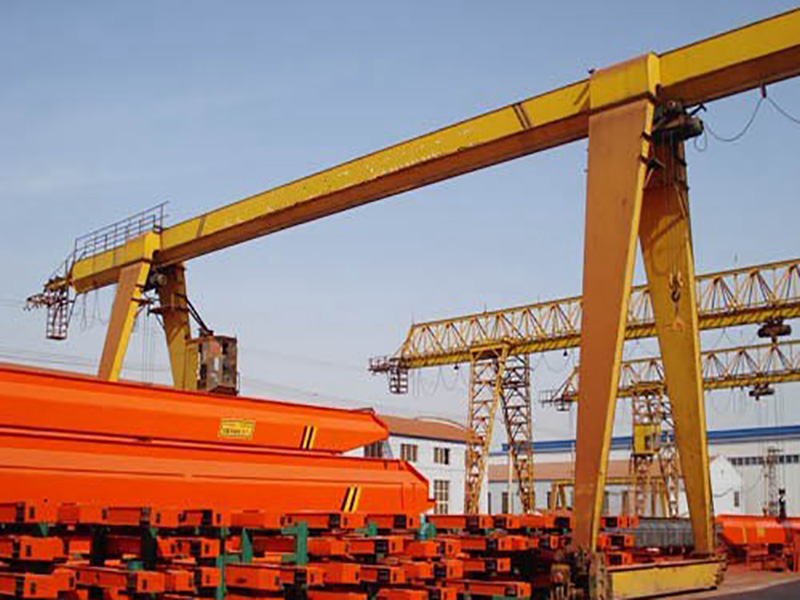
RTG Crane: Complete Rubber Tyred Gantry Applications Guide
RTG (Rubber Tyred Gantry) cranes are core material handling equipment for container terminals, intermodal hubs, and large storage yards. With rail-free mobility, they enable efficient container loading, unloading, stacking, and transfer, making them the top choice for trackless container operations. They are widely used in ports, logistics parks, rail freight yards, and all sites requiring flexible material handling.
What is an RTG Crane
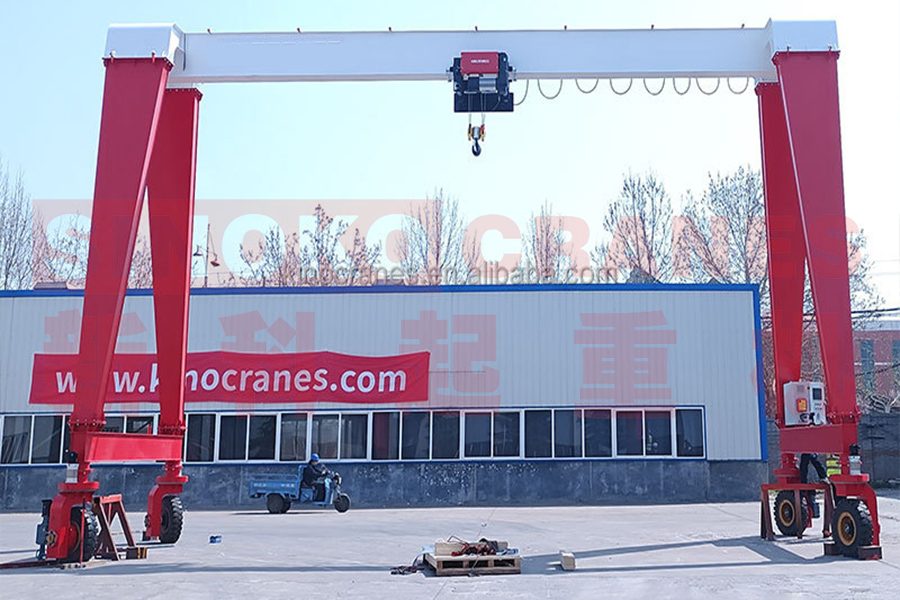
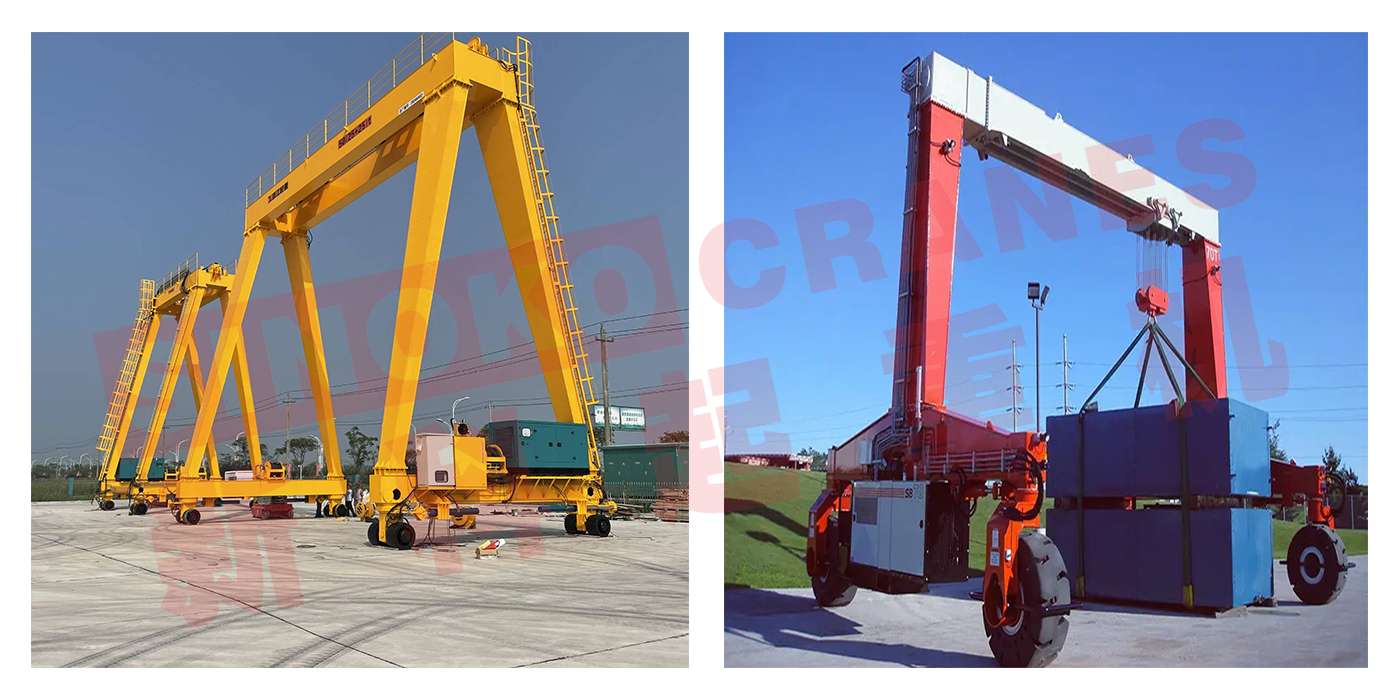
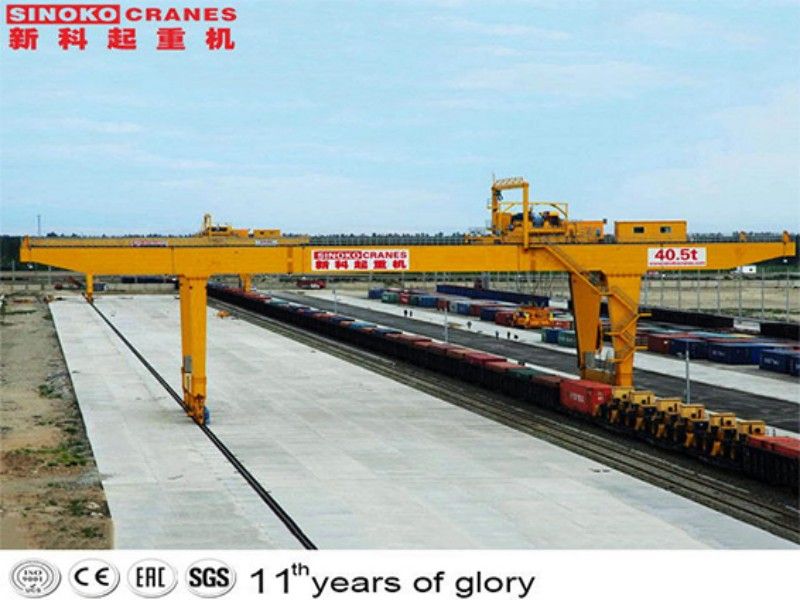
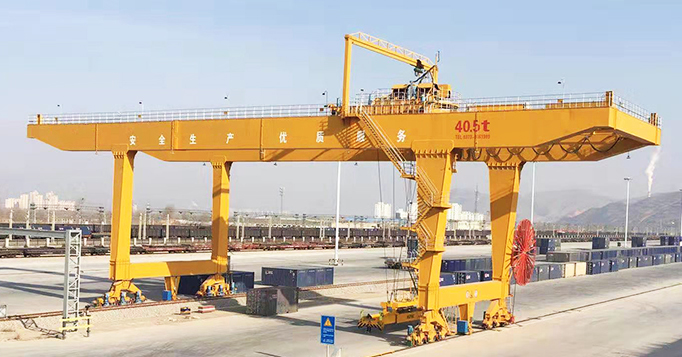
An RTG crane is a mobile gantry crane with rubber tires, allowing free travel in storage areas without fixed rails. Its main structure is a gantry spanning multiple container rows, paired with a spreader for gripping containers. It has greater mobility than Rail Mounted Gantry (RMG) cranes, covering multiple operation zones in terminals and storage facilities.
Its working principle: The gantry supports a trolley and spreader system that moves horizontally along the span. The entire crane is driven by electric motors to travel via rubber tires. The spreader locks into container corner castings, lifting and transferring containers between trucks, rail vehicles, and ground stacking points, ensuring seamless connection of all operation nodes.
Types and Configurations
RTG cranes have various configurations tailored to operation needs, with core classifications and parameters:
Power systems: Electric models get power via cable reels/conductor systems; diesel-electric models have on-board generators for independent operation; hybrid models combine diesel-electric systems with regenerative braking and energy storage to boost efficiency.
Span and lifting capacity: Compact terminals use 3-4 container row spans; large yards use 6-8+ rows. Lifting capacity ranges from 20-40 tons, handling 20-45ft containers of different specs.
Structure and drive: Single-span for simple operations; multi-span for complex terminal layouts. AC/DC motors with variable frequency drives ensure stable operation.
Optional functions: Automated stacking, GPS positioning, collision avoidance, and remote control are available, customizable by operation complexity.
All models have pass-through capability, supporting multi-row container stacking and transfer for diverse storage and operation processes.
Specifications
RTG parameters are optimized for container operations, with core indicators matching different operation scales:
Lifting capacity: 30-40 tons for routine use; 40+ tons for heavy-duty/special operations.
Span: 3-8+ container rows; lifting height supports 1-over-2 to 1-over-6+ stacking for different storage densities.
Operating speed: 60-180m/min (travel); 30-60m/min (lifting), adjustable by terminal throughput.
Power system: 200-500kW diesel-electric units; 380V-460V three-phase electric models; hybrid models integrating both; customized power for ultra-large/heavy-duty models.
Core Specification Matching Table
Capacity | Span (Rows) | Stack Height | Power System |
30 tons | 3-4 rows | 1-over-3 | Diesel-Electric |
35 tons | 4-6 rows | 1-over-4 | Electric/Diesel |
40 tons | 5-8 rows | 1-over-5 | Hybrid/Electric |
40+ tons | 6-8+ rows | 1-over-5+ | Hybrid Electric |
40+ tons | 8+ rows | 1-over-6+ | Custom Power |
Applications
With mobile flexibility, RTG cranes are key equipment for terminals, intermodal hubs, and storage yards, used in core container operation scenarios:
Container terminals: Undertake vessel unloading (quay crane to yard), yard stacking, and gate truck loading/unloading. They serve multiple berths/gates without rail limits, boosting throughput.
Intermodal hubs: Realize rail-truck transfer, yard stacking, and container repositioning. They adapt to complex processes without dedicated lanes, deploying flexibly by transportation mode.
Large distribution centers/storage yards: Handle container receiving, storage organization, order picking, and consolidation. They adapt to inventory changes, product adjustments, and seasonal volume fluctuations.
Advantages
Compared to RMG and other container handling equipment, RTG cranes have distinct advantages:
High mobility & flexibility: Rail-free, enabling free travel and multi-zone operation. Quick repositioning adapts to operation changes, seasonal volumes, and bottlenecks, ensuring strong resilience.
Cost economy: Reduces upfront rail infrastructure investment. Supports incremental expansion without large-scale reconstruction. One device handles multiple functions, improving utilization and cutting unit costs.
Excellent performance: Completes terminal unloading, stacking, and transfer. Rubber tires cause little damage to hardened ground. Supports dense stacking with easy access to individual containers.
Optimized space use: No dedicated lanes for fixed equipment, boosting site and storage density. Adapts to expansion/layout changes with low reconstruction costs.
Rubber Tyred Gantry Applications (Detailed Scenarios)
Container Terminal Operations
RTG cranes empower the entire terminal operation process:
Unloading & transfer: Connect quay cranes and yards, transferring containers to designated areas. Multi-crane linkage serves different berths, improving efficiency.
Yard stacking: Supports multi-row stacking. Pass-through operation accesses deep-row containers without disturbing adjacent ones, enabling dense stacking and easy picking.
Gate operation: Flexible repositioning reduces truck waiting time, accelerating loading/unloading and improving customer satisfaction.
Intermodal Facility Operations
Intermodal hubs rely on RTGs for seamless container transfer and optimized yard management:
Rail-truck transfer: Berths flexibly at rail/truck zones without fixed facilities, boosting intermodal circulation efficiency.
Adaptive stacking: Adjusts stacking modes by container destination, type, and seasonal volumes, matching dynamic flows.
Yard optimization: Quick repositioning and organization reduce container dwell time, improving hub efficiency.
Distribution and Storage Operations
In large distribution centers/storage yards, RTGs support the full container logistics chain:
Inbound storage: Places inbound containers in planned positions, flexibly using storage areas by inventory levels.
Order picking: Retrieves containers to processing areas. One device serves multiple zones, adapting to product changes.
Container consolidation: Collects containers from different areas for unified processing/shipping, supporting complex logistics.
Operational Flexibility (Core Value)
RTGs’ core advantage is extreme flexibility: no rail limits (maximizing equipment use); quick response to demand changes, peaks, and failures; adaptation to expansion/layout changes with low costs.
How to Choose an RTG Crane
Select RTGs based on actual needs, matching core parameters and long-term scalability:
Lifting capacity: 30-35 tons for standard containers; 40+ tons for heavy-duty/refrigerated/special containers. Consider current and future needs.
Span: Determine by container rows and storage density. Balance long spans (wide coverage) and short spans (multi-crane efficiency).
Power system: Diesel-electric for no fixed power (higher costs); electric for reliable power (low-cost, eco-friendly); hybrid for high efficiency/low emissions.
Operation needs: Evaluate throughput, peaks, and modes. Choose single-function or multi-function devices. Decide on automation based on complexity and labor costs.
Also consider total cost of ownership (maintenance, energy, tire replacement).
Maintenance
Standard maintenance extends service life and ensures safety. Establish a hierarchical system per inspection frequency:
Routine inspections: Daily checks (structure, tires, safety systems, spreaders); weekly comprehensive evaluations; monthly detailed tests (focus on moving part wear).
Core component maintenance: Prioritize tires, drive motors, gearboxes, spreaders, steel ropes, and brakes. Diesel-electric models need regular engine maintenance.
Professional testing: Quarterly for continuous operation; semi-annually for moderate use. Includes structural evaluation, load testing, and calibration.
Record management: Document all inspections, repairs, and maintenance to track wear and predict failures.
FAQ
1.RTG vs. RMG cranes?
RTGs have rubber tires (high mobility/flexibility, no rails); RMGs run on fixed rails (higher positioning accuracy, limited mobility).
2.What capacity do I need?
30-35 tons for standard containers; 40+ tons for heavy-duty/special loads. Consider current and future needs.
3.Service life?
15-25 years for the main body (with standard maintenance); tires (consumables) replaced every 3-5 years.
4.Power system choice?
Diesel-electric (independent, higher costs); electric (low-cost, eco-friendly); hybrid (balanced efficiency, regenerative storage).
5.Max span?
3-6 rows (standard); 8+ rows (custom). Determined by storage density and efficiency.
Conclusion
RTG cranes are core flexible material handling equipment for container terminals, intermodal hubs, and storage yards. Their rubber tire design eliminates rail limits, combining mobility, flexibility, and efficiency. They support full-process operations (unloading, stacking, transfer) for enterprises needing flexible container handling.
Key to selection: Match lifting capacity, span, and power system to actual needs. Consider long-term scalability and total cost of ownership. Scientific selection and standard maintenance ensure the equipment adapts to changes and delivers long-term efficient, stable operations.
For customized parameters and quotations, contact us for professional support.