Project Background
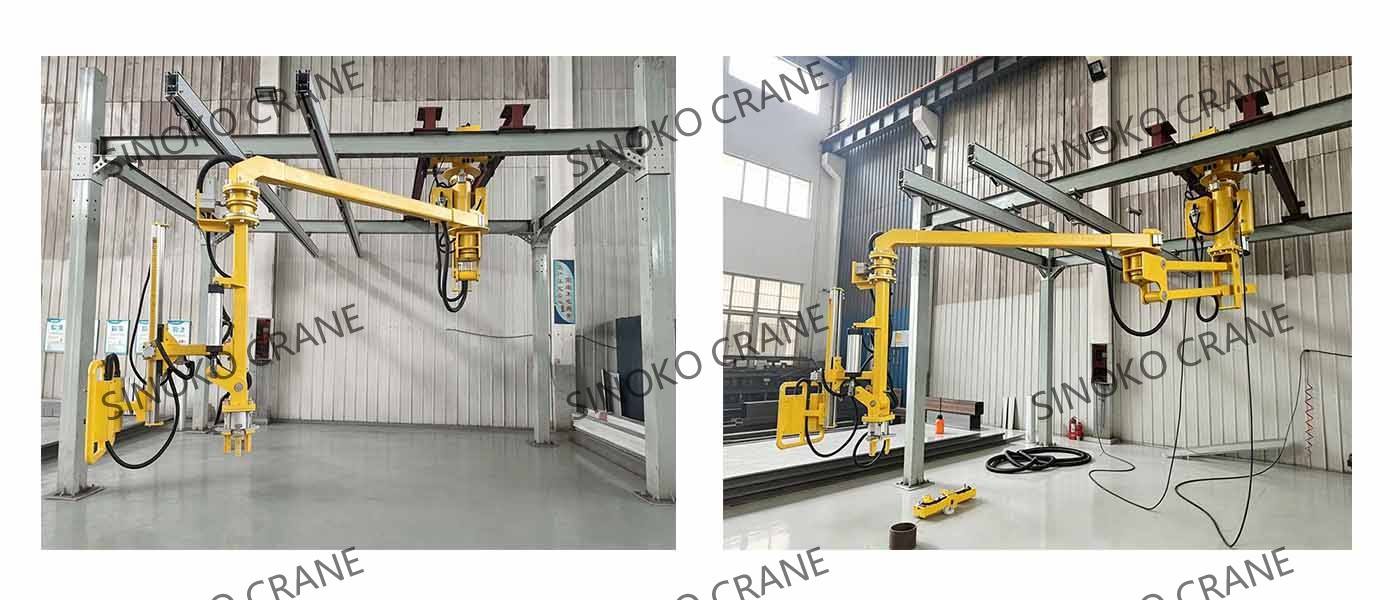
In 2025, we successfully manufactured and delivered 2 sets of custom
manipulators for a Russian engineering services plant. This project imposed extremely strict requirements on material specification control, machining accuracy, and quality acceptance, fully demonstrating our capabilities in the high-end precision manufacturing field.
Application Value of Custom Manipulators
Custom manipulators provide significant operational advantages for industrial automation.
✅ Improving Operation Efficiency
Automated material handling increases throughput. Precise position control ensures accuracy. Fast action response and continuous stable operation maximize production uptime.
✅ Guaranteeing Operation Safety
Reducing manual handling risks protects workers. Lowering labor intensity and avoiding human errors improve workplace safety standards and create a safer operational environment.
✅ Optimizing Production Process
Standardized operation process ensures consistent results. Improved consistency leads to higher quality outputs. Reduced operation costs and enhanced production capacity deliver a strong return on investment.
Technical Specifications Deep Analysis
Overall Dimension Parameters
The manipulator measures 4720mm in total length (long axis direction), 1165mm in total width (short axis direction), and 700mm in total height (vertical direction). Each unit weighs approximately 846kg.
Design Considerations
The design prioritizes stiffness to meet industrial-grade applications and strength to withstand the rated load. Stability ensures smooth operation without vibration, while reliability is built-in for a long service life.
Key Interface Dimensions
Precision interfaces are critical for proper assembly and function.
Pipe End Interface
The pipe end features a D200 diameter with a H11 tolerance class (+0.29). It serves as the reference hole with a surface roughness of Ra≤1.6μm.
Shaft End Interface
The shaft end has a D200 diameter with a h11 tolerance class (-0.29). It is the reference shaft with a surface roughness of Ra≤1.6μm.
Fitting Accuracy Analysis
The fitting uses a hole-basis H11/h11 system. Maximum clearance is 0.58mm, and minimum clearance is 0mm. This clearance fit nature facilitates easier and more reliable assembly.
Connection Bolt Configuration
High-strength connections ensure structural integrity.
Bolt Specifications
Each unit uses 4 sets of M24×100 bolts (8 sets total). The bolts are grade 8.8 or above, made from 35CrMo alloy steel.
Bolt Technical Requirements
These bolts offer a tensile strength ≥800MPa and yield strength ≥640MPa. Hardness is maintained at HRC23-32, with a galvanized or Dacromet surface treatment for corrosion resistance.
Strict Material Specification Control
Material quality forms the foundation of equipment reliability.
Structural Materials
Primary steel plate material is Q345B or Q355B, with a yield strength ≥345MPa and tensile strength of 470-630MPa. Thickness tolerance is tightly controlled at ±0.1mm.
Key Component Materials
The main shaft uses quenched and tempered 40Cr alloy steel. Gears are made from carburized and quenched 20CrMnTi. Guide rails use GCr15 bearing steel. Weldments maintain a strength ≥90% of the base metal.
Precision Machining Process
Advanced machining ensures dimensional accuracy and performance.
Machining Accuracy
Hole diameter tolerance is held to H11 (+0.29), and shaft diameter to h11 (-0.29). Position tolerance is ≤0.05mm, and perpendicularity tolerance is ≤0.02mm for critical alignments.
Surface Treatment Process
The process involves sand blasting to remove oxide scale, application of an epoxy zinc-rich primer, and a polyurethane topcoat. The total coating thickness is ≥80μm for durability.
Welding Process Control
Controlled welding ensures joint strength and component longevity.
Welding Method
Main welds use CO2 gas shielded welding, while tack welding employs TIG (argon arc) welding. Welding parameters follow qualified procedures, and symmetrical welding sequences minimize deformation.
Weld Seam Quality Requirements
Weld seams achieve Grade Class II or above. Quality is verified by ultrasonic non-destructive testing, ensuring defects meet standards. Visual inspection confirms no undercut, slag inclusion, or porosity.
Quality Control System
✅ Process Control
The system includes strict First Article Inspection, 100% self-inspection at process stages, special inspection for critical processes, and complete, traceable records.
✅ Accuracy Verification
Verification employs CMM for precise dimensional checks, geometric tolerance testing for position accuracy and coaxiality, surface roughness testing on key surfaces, and hardness testing post heat treatment.
Assembly Quality Control
Meticulous assembly is the final step in building a reliable machine.
Assembly Process
The process mandates thorough part cleaning, fitting clearances per drawing, correct fastening torque as per specification, and sufficient, appropriate lubrication.
Function Testing
Every unit undergoes a comprehensive function test: an operation test for smooth, jam-free movement, a load test at rated capacity, a positioning test for accuracy, and a life test for reliability.
On-Site Acceptance Support
We support the customer through final verification and handover.
✅ Acceptance Preparation
Preparation involves a detailed inspection checklist, a customer-confirmed testing plan, calibrated and effective testing equipment, and qualified personnel holding relevant certificates.
✅ Acceptance Content
Acceptance includes visual inspection for compliance, dimension inspection against drawings, function testing of all indicators, and a final load test.
✅ Documentation
We provide complete documentation: a Certificate of Conformity with material proof, detailed inspection records, accurate test reports, and a comprehensive user manual for operation and maintenance.
Project Results
The project concluded with outstanding outcomes, demonstrating our commitment to precision and quality.
Material Specification: 100% meeting requirements
Machining Accuracy: Strictly controlled within tolerance range
Welding Quality: Reaching Class II weld seam standard
Acceptance: One-time pass
Related Products
Need a manipulator built to your exact specifications? Our Russian project success—with strict material control, micron-level precision, and 100% acceptance—proves we deliver reliable, high-strength automation. Let's engineer your solution.
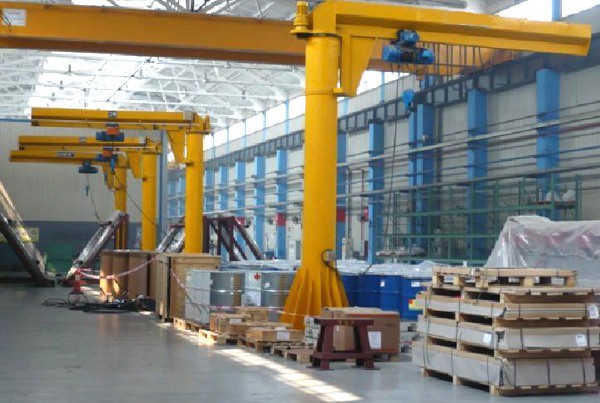
Floor Mounted Jib Crane is a kind of small and medium-sized lifting equipment, the complete range is for loads up to 16 tonnes. Contact Sinokocrane for more information.
Learn More Get a Quote
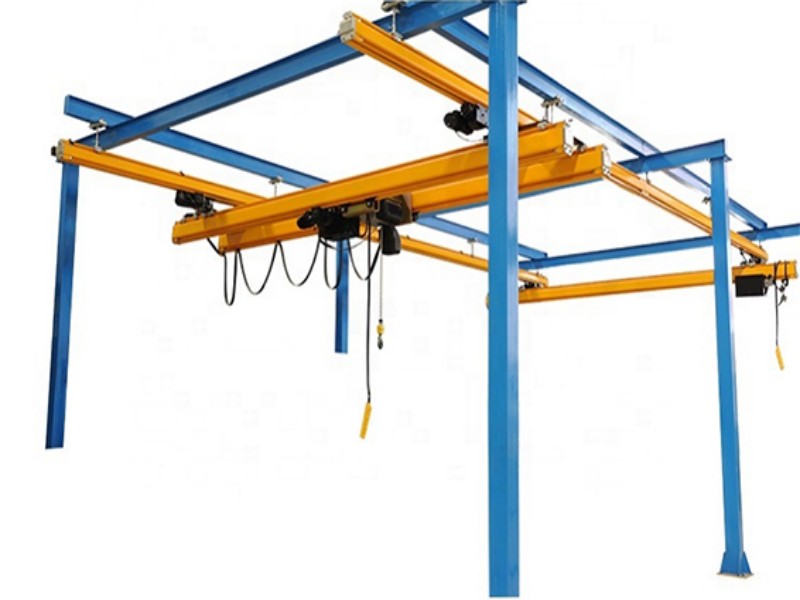
The KBK suspended monorail crane in the KBK light crane system can be tailored to your specific needs for linear aerial handling. By assembling different options, unique advantages can be demonstrated.
Learn More Get a Quote
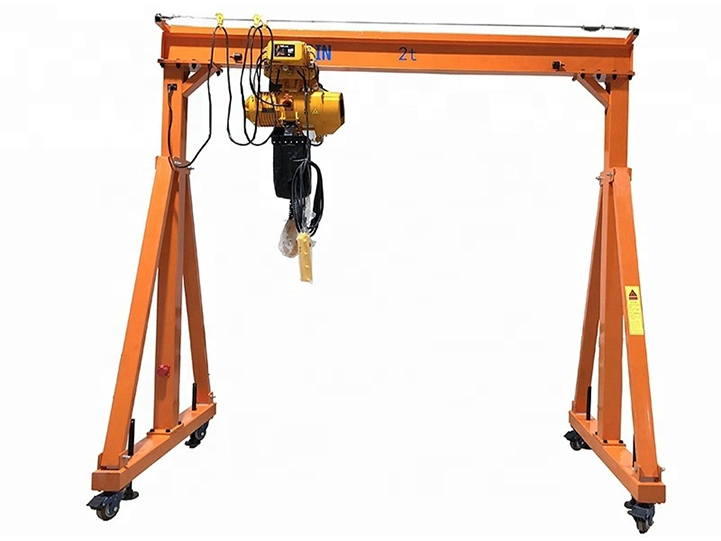
The Small Portable Gantry Crane is a compact, versatile solution for lifting and moving heavy loads with ease. Perfect for workshops and job sites. Get yours today!
Learn More Get a Quote